La Porte de la Flamengrie

Accueil » Découvrir Le Quesnoy » Le Parcours remparts » La Porte de la Flamengrie

Au XIVe siècle, la ville est renforcée par la construction de tours et de portes dont la Flamengrie, percée entre deux tours. En 1523, Charles Quint renforce la place forte et lance la construction d’une enceinte bastionnée. En 1540, elle est murée pour permettre les inondations défensives, la porte reste close plus de trois siècles.

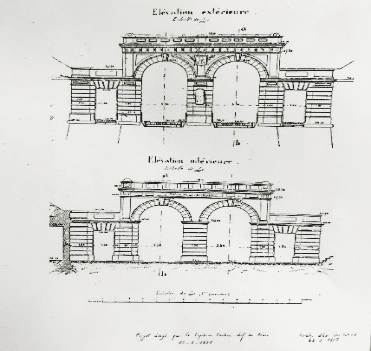
En 1870, elle est rouverte afin de faciliter l’accès à la nouvelle gare. Dix ans plus tard, un projet monumental de porte est proposé puis abandonné au profit de pilastres et grilles adaptées au contrôle des marchandises et à la perception des octrois.

Épargnée par les guerres, elle accueille dans les années 1930 un panneau d’affichage pour le théâtre municipal. En 2024, la porte et la courtine attenante ont fait l’objet d’une restauration.


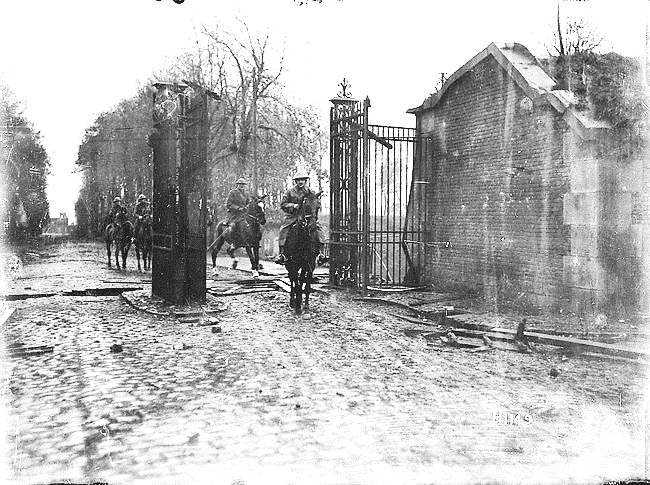
Le 5 novembre 1918, le général néo-zélandais Russell entre à cheval dans Le Quesnoy par la porte de la Flamengrie, au lendemain de la libération de la ville.


Plans du projet de porte de 1880 : deux grandes arches de 6 m de haut et 3,30 m de large pour les véhicules, flanquées de deux petites portes pour les piétons.

In the 14th century, the town was strengthened through the construction of towers and gates, including the Flamengrie Gate, opened between two towers. In 1523, Charles V reinforced the fortress and initiated the construction of a bastioned enceinte. In 1540, the gate was walled up to allow defensive flooding, and it remained closed for more than three centuries.

In 1870, it was reopened to facilitate access to the new railway station. Ten years later, a monumental gate project was proposed but later abandoned in favour of pilasters and railings adapted for the control of goods and the collection of octroi duties.

Spared by the wars, the gate hosted an advertising panel for the municipal theatre during the 1930s. In 2024, the gate and the adjoining curtain wall underwent restoration work.

On 5 November 1918, New Zealand General Andrew Russell rode into Le Quesnoy through the Flamengrie Gate, the day after the liberation of the town.


Plans for the 1880 gate project included two large arches, 6 metres high and 3.30 metres wide for vehicles, flanked by two smaller gates for pedestrians.

In de 14e eeuw werd de stad versterkt door de bouw van torens en poorten, waaronder de Flamengriepoort, die tussen twee torens werd geopend. In 1523 versterkte Karel V de vesting en gaf hij opdracht tot de bouw van een gebastioneerde omwalling. In 1540 werd de poort dichtgemetseld om verdedigende overstromingen mogelijk te maken; de poort bleef meer dan drie eeuwen gesloten.

In 1870 werd zij heropend om de toegang tot het nieuwe station te vergemakkelijken. Tien jaar later werd een monumentaal poortproject voorgesteld, maar uiteindelijk verlaten ten gunste van pilasters en hekken die geschikt waren voor de controle van goederen en de inning van accijnzen.

Omdat de poort gespaard bleef van oorlogsschade, werd er in de jaren 1930 een reclamepaneel voor het gemeentelijk theater aangebracht. In 2024 werden de poort en de aangrenzende courtine gerestaureerd.


Op 5 november 1918 reed de Nieuw-Zeelandse generaal Andrew Russell te paard Le Quesnoy binnen via de Flamengriepoort, een dag na de bevrijding van de stad.


De plannen voor het poortproject van 1880 voorzagen twee grote bogen van 6 meter hoog en 3,30 meter breed voor voertuigen, geflankeerd door twee kleinere poorten voor voetgangers.

Rechercher sur le site

Le Quesnoy l’appli

GRATUIT
VOIR